Sunday, June 29, 2025

Northern Ireland


Derry (known in Britain as Londonderry) is an incredibly historic town, fought over since Viking times.  The walls around the city, completed by the English Protestants around 1618, are intact and provide a great way to literally walk “around” the city and learn about its history.  The region is predominantly Catholic, so the walls kept the Protestants in and the Catholics out.  The city is famous for repulsing the Catholic army of deposed King James I in 1688.  The city is equally famous for the Bloody Sunday massacre in 1972 that triggered the Troubles (and the U2 song).

Derry Diamond


Derry Wall canon


St Augustine Chapel


Columb Cathedral

Guild Hall from Derry wall

Bishop's Gate


The Guildhall, just outside the walls, is a beautiful building and has a small museum dedicated to the “Plantations of Ulster”.  It describes Britain’s intentional settlement of mostly Scottish farmers into the land confiscated in Ulster from Catholics who fought against the English in the early seventeenth century.  

Waterloo Street

Waterloo street, just outside the walls at Butcher Gate, has numerous pubs that we visited.  Peader O’Donnell’s pub had good live music.  We had a great meal at Exchange Restaurant and Wine Bar near the Peace Bridge.  Dinner at Fitzroy’s was very good.  


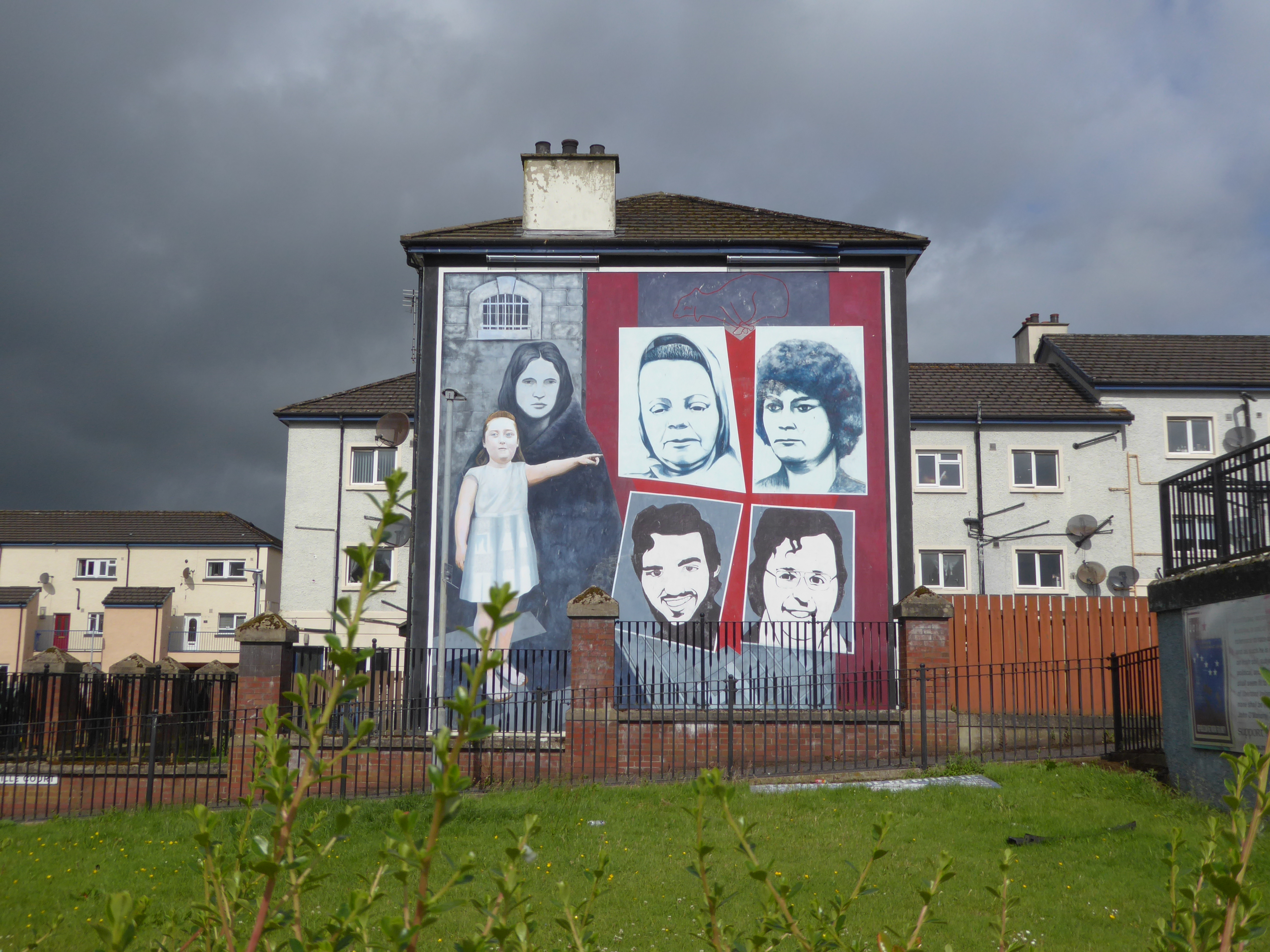
We took a walking tour of the various murals that adorn buildings throughout the Bogside neighborhood, the site of most of the protests, riots and violence of the Troubles in Derry.   The Free Derry Museum is fantastic, and the best museum we visited in Ireland.  It chronicles the events leading up to Bloody Sunday, and should not be missed.  The related Peacemakers Museum follows the history of the Troubles after Bloody Sunday, through the Good Friday accord in 1998 that ended the Troubles, but was not as compelling as the Free Derry Museum.  Both museums provide the Catholic viewpoint, the Protestant viewpoint is evident within the walls of the city.  Since the 1970s, the Catholic Irish have found common cause with Palestinians, and it is evident in Bogside with many Palestinian flags and signs.  

Palestinian mural

Bloody Sunday
The Innocents

Operation Motorman

Operation Motorman

The Hunger Strikers


H-Block Memorial,
where Republican prisoner 
were held

Memorial on the spot of the
first shots of Blood Sunday

The Oppressed


Portrush is a seaside community that is often the jumping-off point for visits to Giant’s causeway, which we visited several years ago.  There’s not much to the town, but the 2025 British Open is being played at the Royal Portrush.  We visited the clubhouse and saw a few of the holes.  

The Harbour Bistro bar is tiny, but is the unofficial home of Irish golfer Darren Clarke (he keeps his 2011 British Open trophy in a case at the bar).  The bartender Alex was great, we spoke to him for over an hour.  We had a great dinner at Shanty, which has amazing views from their deck over the water, from which you can see Royal Portrush golf course.  The Elephant Rock B&B was excellent, with beautiful views of the sea.  

Outside of town, just east of Royal Portrush, are the ruins of Dunluce Castle.  Dating from the Middle Ages, in 1639 the dining room of the castle collapsed into the sea, forcing the Countess of Antrim to abandon the castle.  

View of Royal Portrush

British Open at Royal Portrush

Dunluce Castle


Belfast

On our first visit to Belfast, we took a guided “Troubles Tour” which walked through the Protestant Shankill Road and Catholic Falls Road.  It was a fantastic overview of the Troubles, providing insights from a local resident who lived through those difficult times.  On this trip, we focused on other areas of the city.  

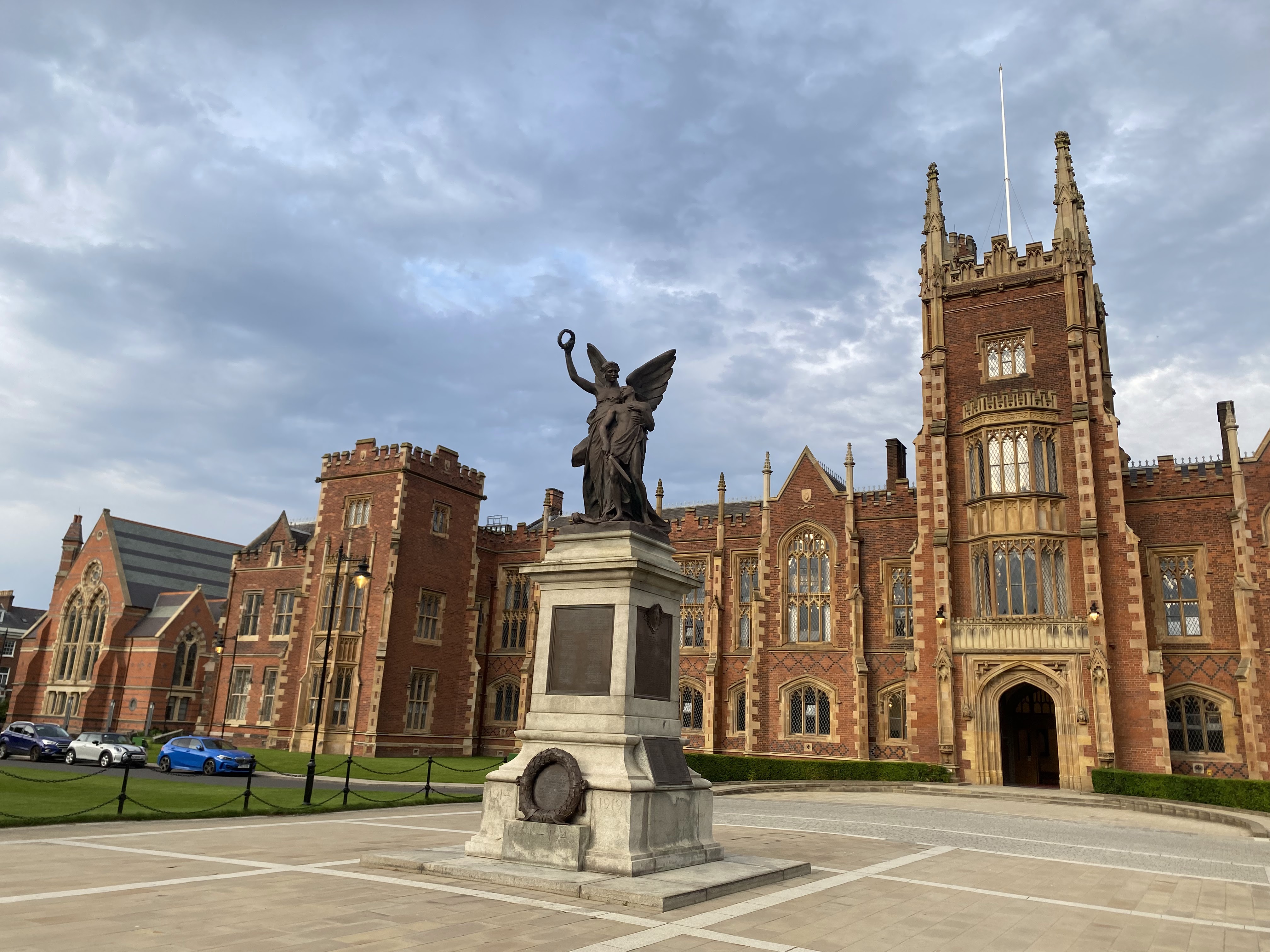
The neighborhood around Queens University (where our hotel was located) is really nice, with lots of shops and restaurants; the university is beautiful. In City Center, there is lots of Victorian architecture, since Belfast was a booming manufacturing city for the UK during the industrial revolution.  The Crown Liquor saloon is typical of Victorian pubs, with “snugs” which are discrete little cubicles where couples can drink without being seen (there are several of these Victorian bars in Dublin as well).  Across the street, the contemporary Europa Hotel was bombed over 30 times during the Troubles!  Bill Clinton stayed here during the negotiations of the Good Friday accord.  The Linen Hall Library has displays of political posters that are very  interesting.  

Queens University

Belfast City Hall

Belfast Opera House


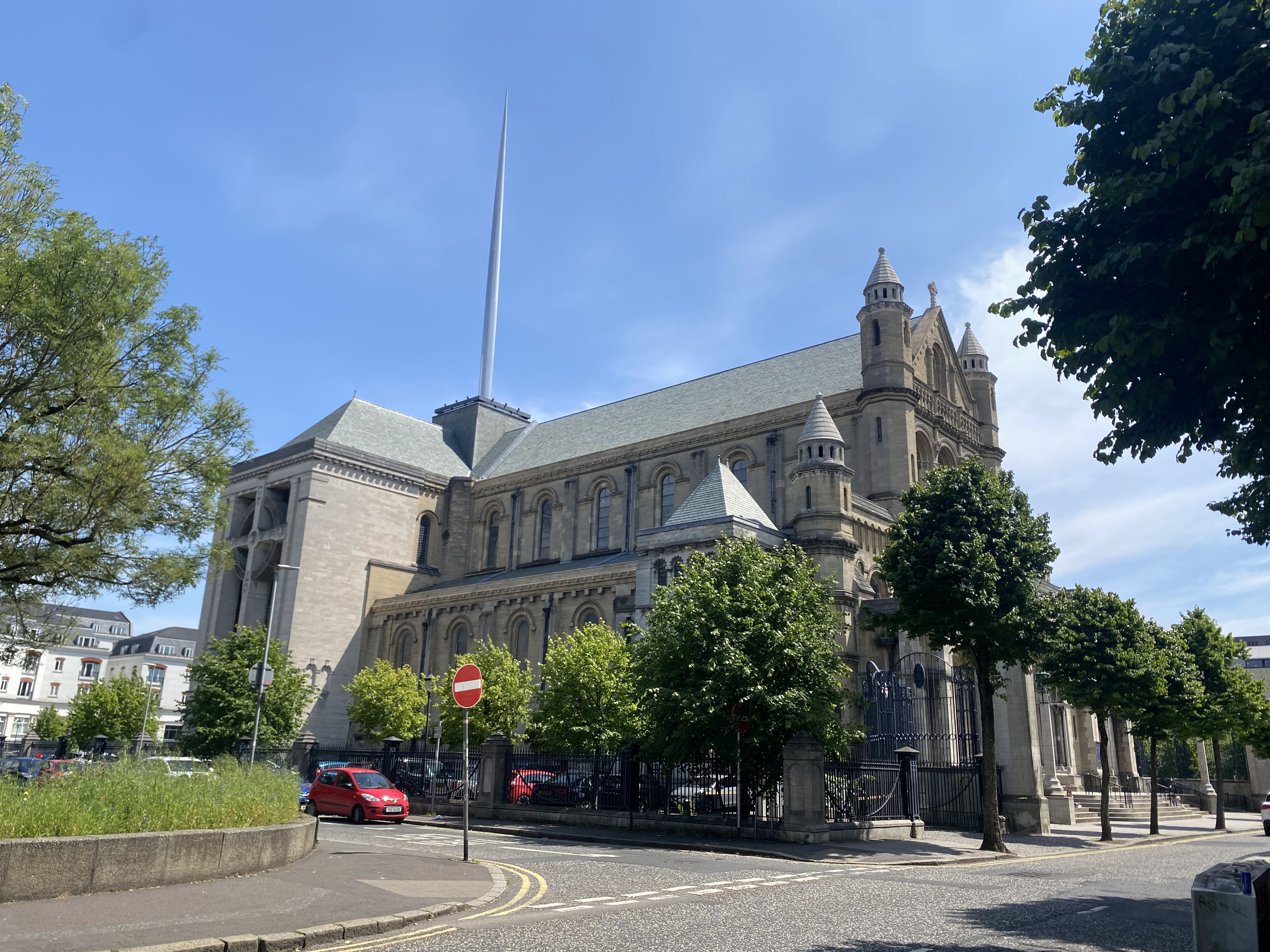
Cathedral Quarter has a maze of streets that are filled with pubs.  Merchant Hotel was previously a bank, and has a stunning interior.  Whites Tavern is the oldest in Belfast, the Duke of York is where journalists met during Troubles.  Kelley's Cellar was the site of the 1798 Rising planning (we had dinner at Mourne’s next door), and The Sunflower has a cage at its entrance where guests would be screened prior to entry during the Troubles (after a spate of bar shootings by both Loyalists and IRA); it’s a grim reminder of those violent times.  The Northern Ireland War Memorial is very small but has an interesting display of memorabilia.  

Belfast Cathedral

Exchange Place

Duke of York


Sunflower Bar cage

Merchants Hotel lobby

Protestant mural


Protestant poster

"Crimestoppers Anonymous" - 
whatever that means...

Northern Ireland War Memorial

White's tavern


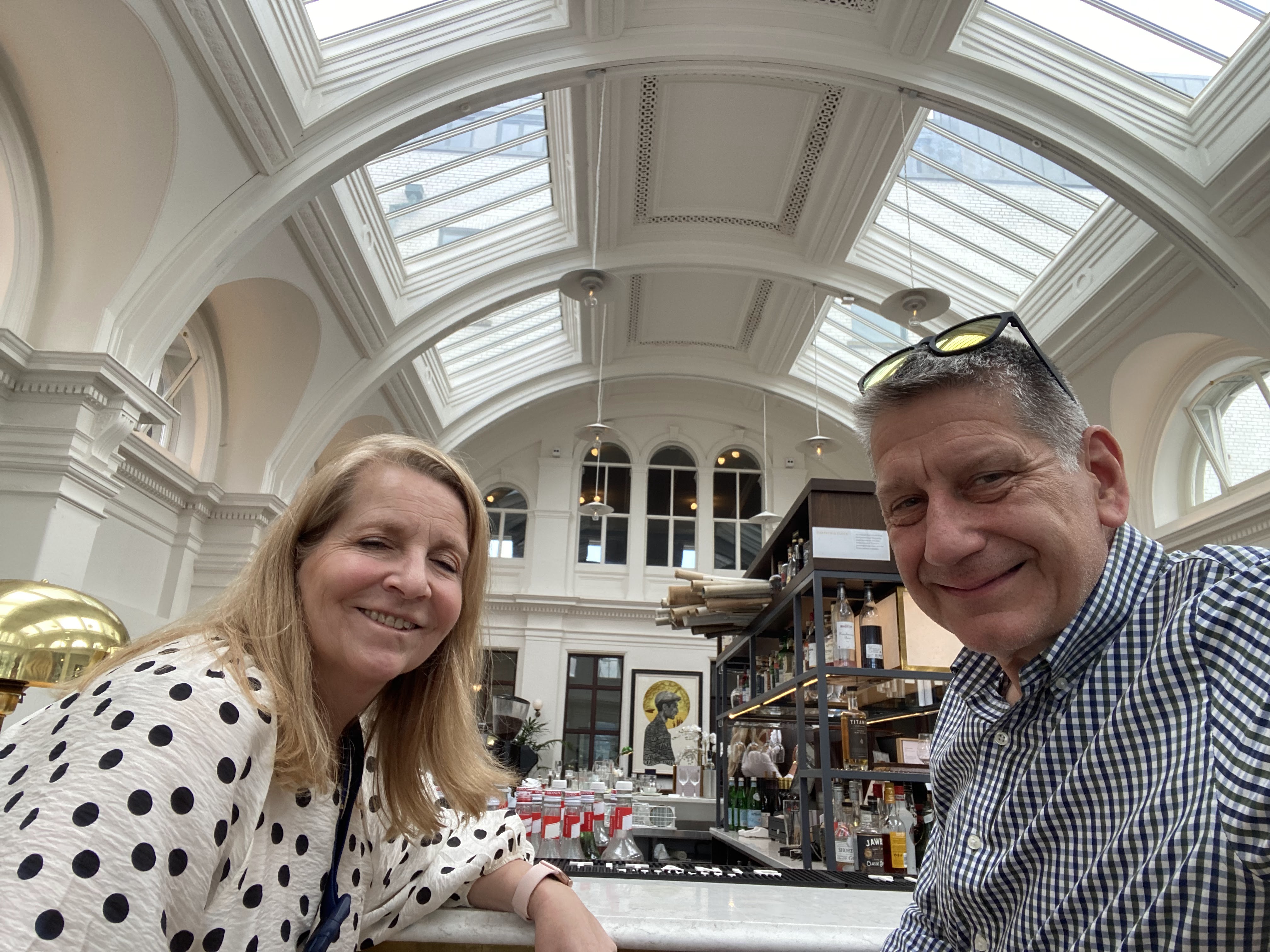
The Titanic Quarter comprises the former H&W Shipyard that built the Titanic and hundreds of other ships, as Belfast was the major shipbuilding site in the UK.  The Titanic Museum was very interesting and well curated.  The Titanic Hotel is in the old headquarters building of H&W, and the old drafting room has been converted into a beautiful bar.  

Titanic "listing test"

Titanic Hotel Bar

Actual deckchair from Titanic


On the drive from Belfast to Dublin we visited Monasterboice, a former abbey from the Middle Ages.  Amid the ruins are numerous ancient Celtic Cross grave markers, with the Cross of Murdock (c. 923) considered the finest in Ireland; the intricate carvings are noteworthy.  We then visited several sites along the River Boyne. There is a small museum at the site of the Battle of the Boyne, where in 1690 British forces under King William III defeated Catholic resistance forces under deposed King James I (supported by the Dutch), securing control of Ireland for Britain.  We visited Newgrange which is a Neolithic Age (3200 BC) burial mound.   Finally, in the small town of Trim are the incredible ruins of Trim Castle overlooking the Rover Boyne.  

Trim Castle

Monasterboice round tower

Cross of Murdock


Dublin


We stayed at the Shelbourne, which is a grand old hotel overlooking St Stephen’s Green, a perfect location in Dublin.  To get oriented, we took a couple guided tours.  The Fab Foods Trails of Dublin gave us an introduction to the city’s culinary scene, along with historical context.  Highlights were Sheridan’s Cheesemonger (we brought home several great cheeses), the Pepper Pot bakery and café in the beautiful Powerscourt Mansion (1774), the excellent Fallon & Byrne gourmet grocery, and the Griolah grilled “toasties” near Temple Bar.  Through AirBnB we booked the "Sunday Afternoon traditional Irish Music Pub Crawl" tour, our guide Linda took us to three pubs to hear Irish trad and folk music. O’Donoghue’s near our hotel [music links here and here], Devitt’s south of St Stephen’s Green (music here, the band played “of Philadelphia” for us [music here]), and the Brazen Head (they claim to be the oldest pub in Ireland dating from 1198, but that it hard to believe) [links to music here and here].  The music was excellent and we had so much fun. 

Famine statues

Customs House

Shelbourne Hotel

River Leffey

O'Donoghue's Bar

Portal installation, with 
Phlly at the other end!


North of the River Leffey, O’Connell Street (named for Irish Nationalist Daniel O'Connell) is the main avenue with department stores and the General Post Office, which was the site of the 1916 Easter Rising.  There is a very good Witness History museum in the General Post Office describing the events that led to the Easter Rising and the war of independence.  Where the first shots were fired on O’Connell Street, there is 398 foot tall spire that stands as a monument to the revolutionaries.  

Easter Rising Spire

General Post Office

Daniel O'Connell statue


We took a tour of Trinity College which was chartered by Queen Elizabeth I around 1592.  It’s a beautiful campus, especially the Trinity Library which houses the Book of Kells.  This 1200 year old manuscript includes the four gospels, and is illustrated with art that is considered the greatest piece of art from the Middle Ages.  The National Museum of Archeology has artifacts from Dublin’s Viking and Norman periods.   

Trinity College

Trinity Library

Trinity College


Christ Church

Cross of Cong Abbey

Oldest Harp, symbol of 
the Republic of Ireland

Dublin Castle

Office of Taoiseach (Prime Minister)


An elegant townhouse at 14 Henrietta Street is a museum that depicts the opulent lifestyle of wealthy eighteenth century Dublin elite.  But when Britain closed the Irish Parliament with the Act of Union (1801), parliamentarians and other aristocrats left Dublin for London.  Homes like 14 Henrietta were abandoned, and after the Great Famine these buildings were converted into tenements.  The structure that once housed a family of six later housed 17 families of over 100 people!  Our guide told us their story, and it was fascinating.   

14 Henrietta Street

14 Henrietta tenement apt


The Teeling Whiskey Distillery tour was interesting, highlighted by tasting four of their whiskeys.   

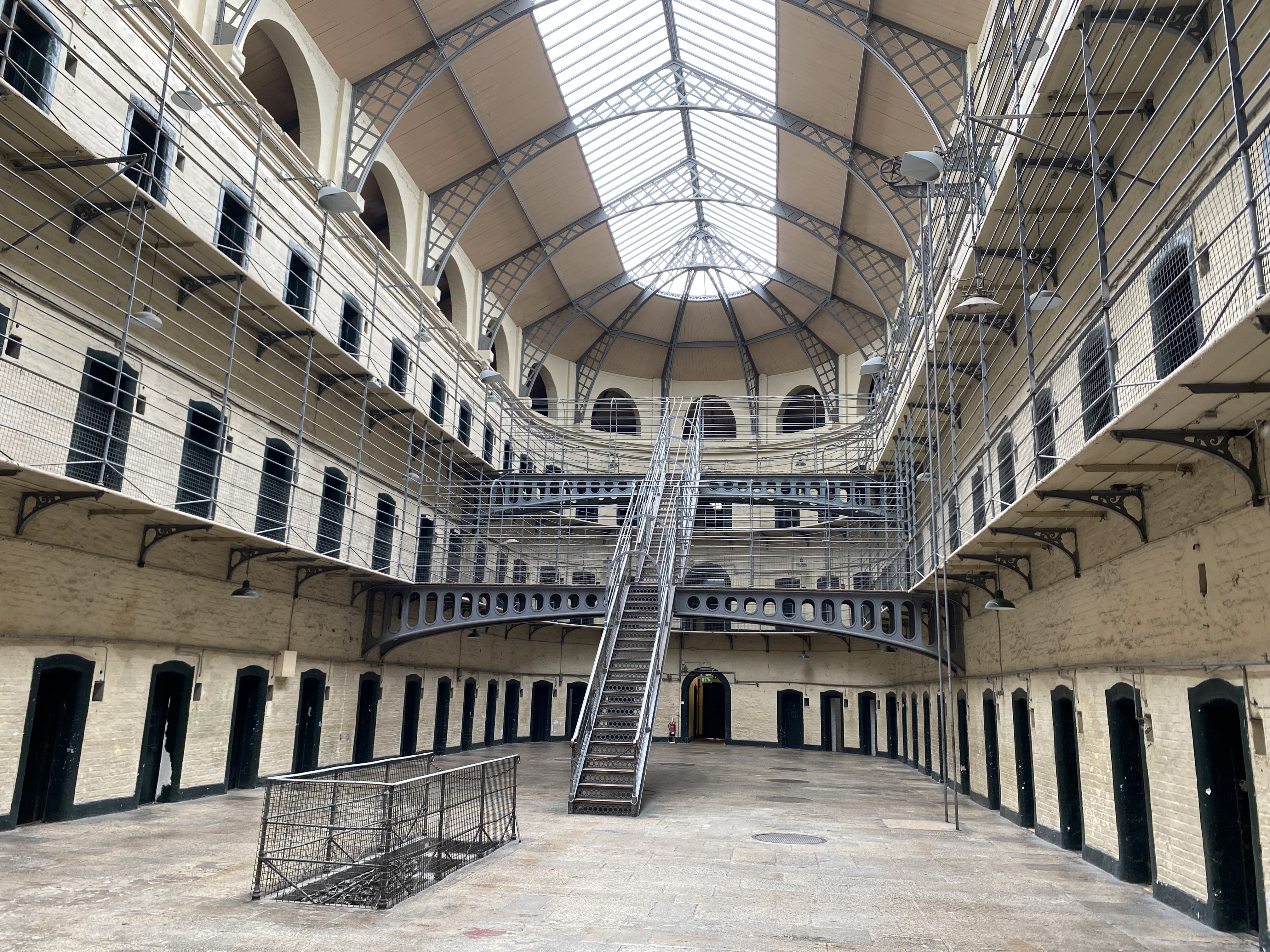
Kilmainham Gaol (jail) was opened in 1796, and was greatly expanded in the Victorian era.  It housed many of the revolutionaries from revolts throughout Ireland’s history, particularly the 1848 revolt and the 1916 Easter Rising. Fourteen of the Easter Rising organizers were executed here, Eamon De Valera was spared from execution because he had US citizenship; after the war of independence, De Valera became Free Ireland’s first president.  Kilmainham is a fascinating place to visit, the tour was excellent, bringing the history to life, and highlighting the personal stories of those incarcerated here.  

Kilmainham Entrance

Stonebreakers Yard, cross marks
where the convicted were shot 
by firing squad

Kilmainham Gaol

Victorian cell block

Note statement etched in stone

Gaol cell


We visited too many great pubs to mention, but here are some: Toner’s, Stag’s Head and John Kehoe Victorian Bars, O’Connell’s, Temple Bar (yes, the tourist trap), O’Neill’s Pub across from the Molly Malone statue, The Bank Bar (beautiful interior), just to name a few.  

John Kehoe's

Teeling Distillery

Brazen Head

Devitts

Stags Head


The Pig's Ear was excellent, offering elevated local cuisine, such as Dublin Coddle ham potato and onion and sausage in savory herbaceous broth.  The mixed grill was excellent, as were the Boulluates which are beef croquettes with Coleman mustard dipping sauce.  Chequer Lane by Jamie Oliver was very good, and Peploe’s (great French onion soup).  

Sunday, May 4, 2025

Philadelphia Suggestions


Tammy and I are often asked by visitors to Philadelphia for suggested sites, activities and restaurants.  Below are some of our favorites, along with a 2-3 hour walking tour.  With the Semiquincentenial, FIFA World Cup, and MLB All Star game coming in 2026, we are expecting a lot of visitors!  

Philly Walking Tour

Start at City Hall, see historical markers on west side, walk through courtyard.  Guided tours are available.  

Walk east on Market, left on 12th one block to Reading Terminal Market on your right.  Try Dinic's Roast Pork sandwich with broccoli rob and sharp provolone, and for dessert Bassett's ice cream (best in Philly).

Return to Market St on 12th Street, cross over Market and continue south on 12th. 

Make a right on Locust St, then left on Camac Street (looks more like an alley than street)

Left onto Pine St, which is "Antique Row" between 12th and 9th Streets.

Italian Market detour (30 minute roundtrip walk): Take a right on 9th Street,   Four blocks south is Angelo's, our favorite pizza (see below), followed by Sarcone's Bakery and Mawn Cambodian Restaurant (2025 James Beard Award, reserve months in advance).  The famous Italian Market stretches South from Christian to Washington.  Turn right on Christian to Isgro's Pastries.  Return to 9th and head south, stop in Di Bruno Brothers and Claudio's.  Walk one more block south of Washington on 9th Street to South Philly Barbacoa (James Beard Award) for a quick snack.  Return on 9th to Pine Street and turn right to continue the walk.  

Continue on Pine, turn left on 8th, right on Spruce, left on 7th and enter Washington Square Park.  See Tomb of Unknown Soldier.  Walk to northeast corner, see historical markers, cross Walnut and enter the Curtis Building on left along 6th St to see Tiffany mural (behind mural is impressive atrium).

Exit building and cross 6th to see the back of Independence Hall and statues in the park.  Circle the building to enter (reserve tickets on US Park Service website).

Cross Chestnut Street to visit the Liberty Bell, no ticket needed, the line moves quickly.

Head east on Chestnut past Second Bank of US, enter Carpenter Hall (on right between 4th and 3rd) reading historical markers.

Return to Chestnut.  The Museum of the American Revolution (at 3rd and Chestnut) is excellent.   Turn right (south) on 3rd St.  Walk past First Bank of US, turn left onto Dock St past Merchant Exchange Building.  

Our favorite restaurant is Zahav (on St James Place), reserve one month in advance.  They have an amazing tasting menu, make sure to order the lamb shoulder.

Head House Square Detour (15 minute roundtrip walk): Follow 3rd Street south to Pine, turn left and then right on 2nd Street.  This is Head House Square, a marketplace since 1745.  Bloomsday and Twisted Tail are great bars with decent food, Pizzeria Stella is very good.  When done, return to the tour by heading north on 2nd St, right on Pine at A Man Full of Trouble Tavern (worth a stop), then left on 38th Parallel Plade which becomes Dock Street. Past the Marriott, turn right on 2nd St.

Take 2nd St north from Walnut, with many restaurants and bars along 2nd between Chestnut and Market (Sassafras is a great bar).

Continue on 2nd across Market, The Book Trader bookstore is on the right, Christ Church is on the left (Washington and Franklin worshipped here).  Continue two blocks north on 2nd, turn right onto Elfreth's Alley (oldest inhabited street in US).

Return to 2nd, left (south), turn right on Arch.  Betsy Ross House in on right.  

Continue west on Arch past Quaker Meeting House and Christ Church Burial Ground (look through iron bars to see Benjamin Franklin tomb).  The tour is over, but you have options...

Option: The US Mint offers free self-guided tours

Option: National Constitution Center is interesting


After the tour, return to City Hall for one of these side trips:

Option 1: Take Benjamin Franklin Parkway northwest to the Philadelphia Art Museum (note Rocky Statue to the right of the "Rocky" stairs).  Along the way, see the Logan Fountain, Barnes Foundation and the Rodin Museum.  Have beer at Victory Brewing, or drinks at Assembly Rooftop in the Logan Hotel. 

Option 2: Have drinks at Ritz Carlton on Broad St across from City Hall.  Continue south on Broad past Union League, turn right on Walnut St.  Walk four blocks to Rittenhouse Square.  Walk into a Gilded Age mansion which houses the Anthropology Store, upon entering see the circular stairs, then turn right and walk into the back room, look up at ceiling.  On 18th overlooking Rittenhouse is Parc Restaurant (perfect for brunch), and Barclay Prime (excellent steakhouse); on Walnut Steet North of the Square is Borromini Trattoria.  Other great eating choices on 18th north of Walnut: a.kitchen (burger), The Love, Dandelion (pub), and Di Bruno Brothers Italian grocery.

Recommendations:

Best Philly Cheesesteak: Angelo's (736 S 9th), also best pizza, but it is take-out only.  

Best Philly Soft Pretzel:  Philly Pretzel Factor have many locations throughout the city (including Terminal F at PHL airport).  

Favorite food store: di Bruno Brothers,(1730 Chestnut St, bigger than their Italian Market location) plus everything at Reading Terminal Market.